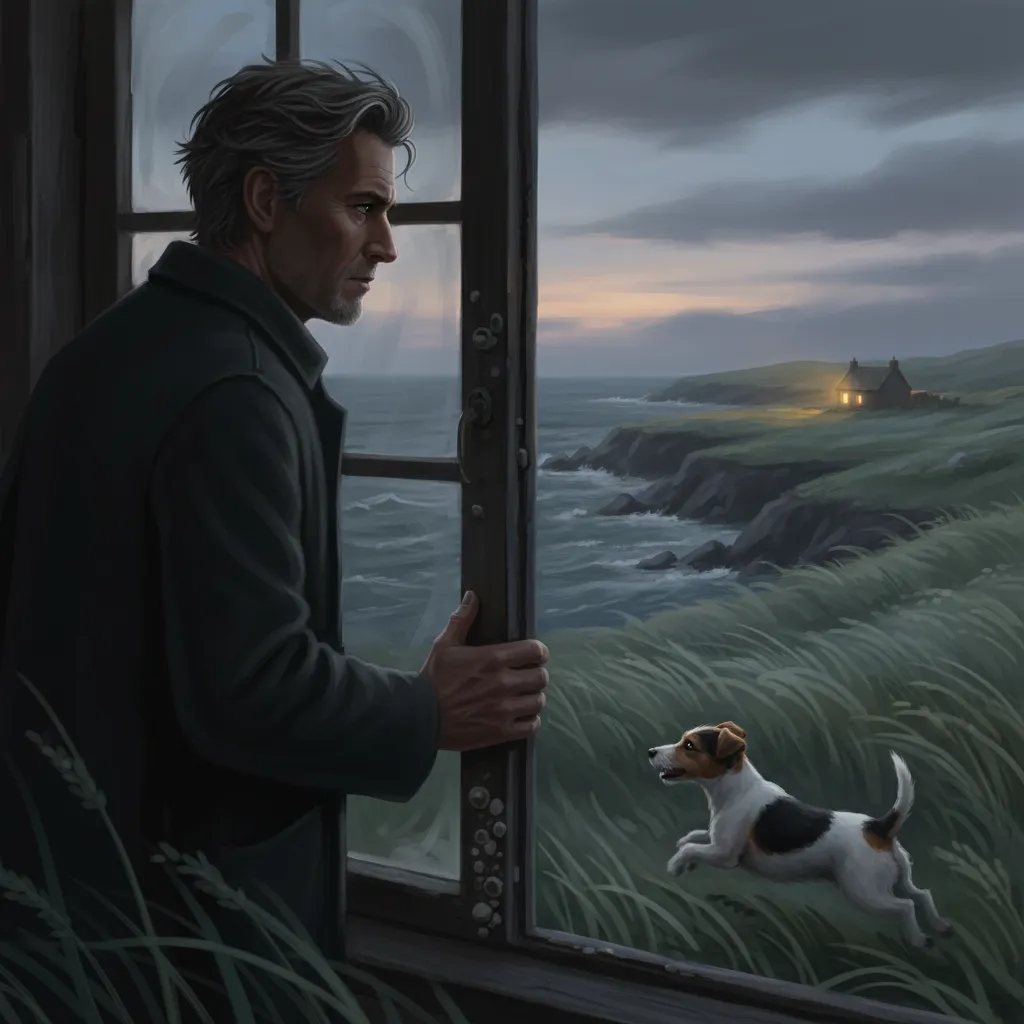

Every dawn for three years, Elias Holt monitors the sea from his silent cape house, measuring a predictable world to keep the past at bay. But when a light appears in the long-empty cottage opposite, a small dog races toward the cliff edge with reckless abandon, forcing him to confront the one thing his charts cannot predict.
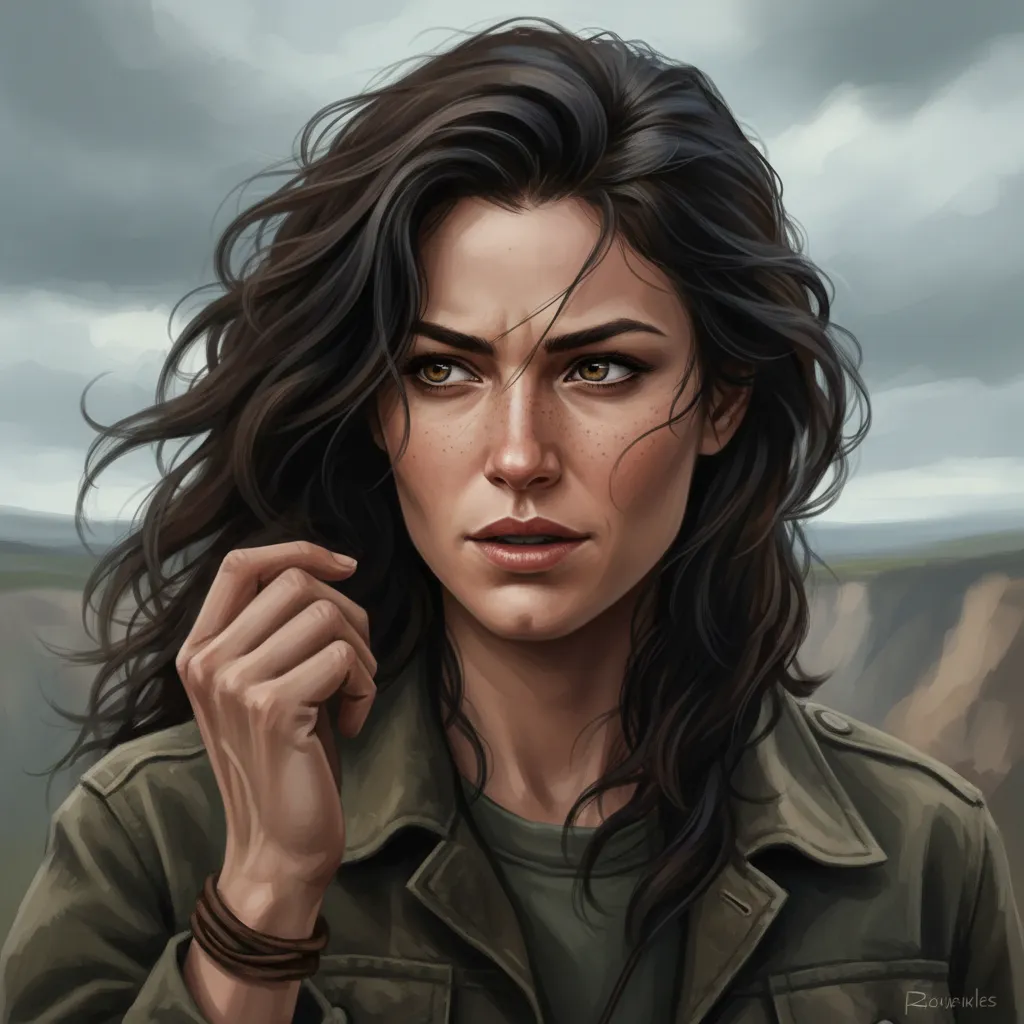
He pulled a sweatshirt over his t-shirt and went out. The cold air burned his lungs. He didn't run; he walked with the fast, economical stride of a man who knows that haste wastes energy he might yet need. The dog was already at the very edge, interested in a seagull screaming from a ledge. "Hey!" Elias called, but the wind carried his voice away. The dog turned, wagged its stump of a tail, and took a step forward, toward the slippery edge. At that moment, she ran out of the cottage. In jeans and a huge sweater thrown over her shoulders. Copper hair, gathered in a messy bun, flying in the wind. "Fenix! Damn it! Come back!" The dog obeyed. For a second. Then it darted toward the edge again. Elias was already there. He didn't try to catch the dog—it was too fast and skittish. He intercepted its trajectory, blocking the path to the drop with his body. The Jack Russell crashed into his legs, yelped in surprise, and sat down. "Thank you," the woman said, running up, out of breath. "He... he hates enclosed spaces. Howled the entire drive here." "His name is Fenix?" Elias picked up the dog, feeling its trembling heartbeat under its fur. "After the bird that rises from the ashes," she said, and her voice held a bitter irony. "So far, he only falls off of everything." He handed her the dog. Only now did he really look at her. Not just her face—everything. Young, but not youthful. Sharp cheekbones, a wide mouth. And eyes—the color of the sea in weather like this, grey-green, with flecks of gold. And the scar. A thin, white thread on her upper lip. But his gaze, against his will, slipped lower. To her neck, long and strong, where a pulse beat. To the collar of her stretched-out sweater, which had slipped, revealing a sharp collarbone and the beginning of a smooth shoulder curve. The wind pressed the thick sweater fabric against her torso, and for a moment it outlined a high, firm line of breast and a thin waist cutting sharply inward beneath it. It was an instant, fleeting impression, but it was enough. Something jerked in his gut—not alarm, but a thick, warm thud, familiar and long-forgotten. His blood seemed to rush from his head for a second, rushing somewhere downward, leaving behind a faint ringing in his ears and a sudden dryness in his mouth. He sharply forced his eyes back up to her face, catching her gaze. She was looking at him not with fear, but assessingly—as if she had seen the fleeting route of his eyes over her body and registered its conclusion. In the corner of her mouth, that same scarred one, a barely noticeable muscle twitched. Not a smile. Something like... recognition. "Elias Holt," he forced out, and his voice came out raspier than he intended. "Head of the rescue station. Your neighbor." "Lira," she said, holding Fenix close, who was now licking her chin. Her movements were fluid, but there was a springy strength in them. "Thank you, again. He seems to think a leash is an insult." "The tide will be high tonight, and the beach down there disappears," he said, nodding toward the cliff. "He's small. A wave could wash him away." She looked there, then back at him. Her gaze was direct, assessing, without a hint of coquetry. "I'll keep that in mind. I won't let him out again." "That's not the point," he felt an irritation familiar from dealing with tourists who ignored rules. "The point is you need to reinforce the fence, not rely on obedience." "I'll reinforce the fence," she parried. "As for obedience... I'm not counting on it much." She turned and left, carrying the grumbling Fenix under her arm. Elias remained standing, feeling the cold wind seep under his sweatshirt. He returned home, to the tea that had now gone cold. Tried to immerse himself in the reports again, but his gaze kept returning to the window opposite. After a while, she came out with a garbage bag. Among the scraps of paper and packaging, he noticed a broken wooden mat from a large picture frame. A shard of glass glinted for a moment and disappeared into the bag.
The storm hit the cape with a fury that shook the old windowpanes. When the power died, Elias saw the frantic beam of a flashlight from her cottage. He found her in the doorway, soaked, Fenix trembling in her arms. 'The radio,' she said, not asking. 'I need to know if it's safe.' He led her back through the lashing rain, and in the dim glow of his battery-powered lantern, as he pointed out the trawler's coordinates on the chart, her shoulder brushed his. The world outside was chaos, but here, in this circle of light, the only sound was their breathing, and the charge between them was thicker than the storm.
The storm rages, but the silence he offers now is different—not a wall, but an open door. He tells her of the snapped line, the cold water, the silence beneath the waves. As he speaks, her fingers don't leave his skin, anchoring him to the warmth of the room, to her. It's a confession not of injury, but of solitude. In sharing the old wound, he offers her the key to the fortress he's built, and the world transforms from a shared space into a shared history.
The wind howls around the lighthouse, but inside, time seems to pause. Lira doesn’t ask—she simply leans in, her lips pressing against his in a bold, fleeting kiss. Shock and something unspoken stir within Elias, a pulse he hasn’t felt in years. The sea outside crashes relentlessly, mirroring the sudden surge of emotion between them. In that single, unbidden moment, the edge of the world becomes their own private stage, and a quiet, inevitable connection ignites. It is the beginning of a romance neither expected, yet both have been drawn toward, as if the wild, untamed coast itself had conspired to bring them together.