
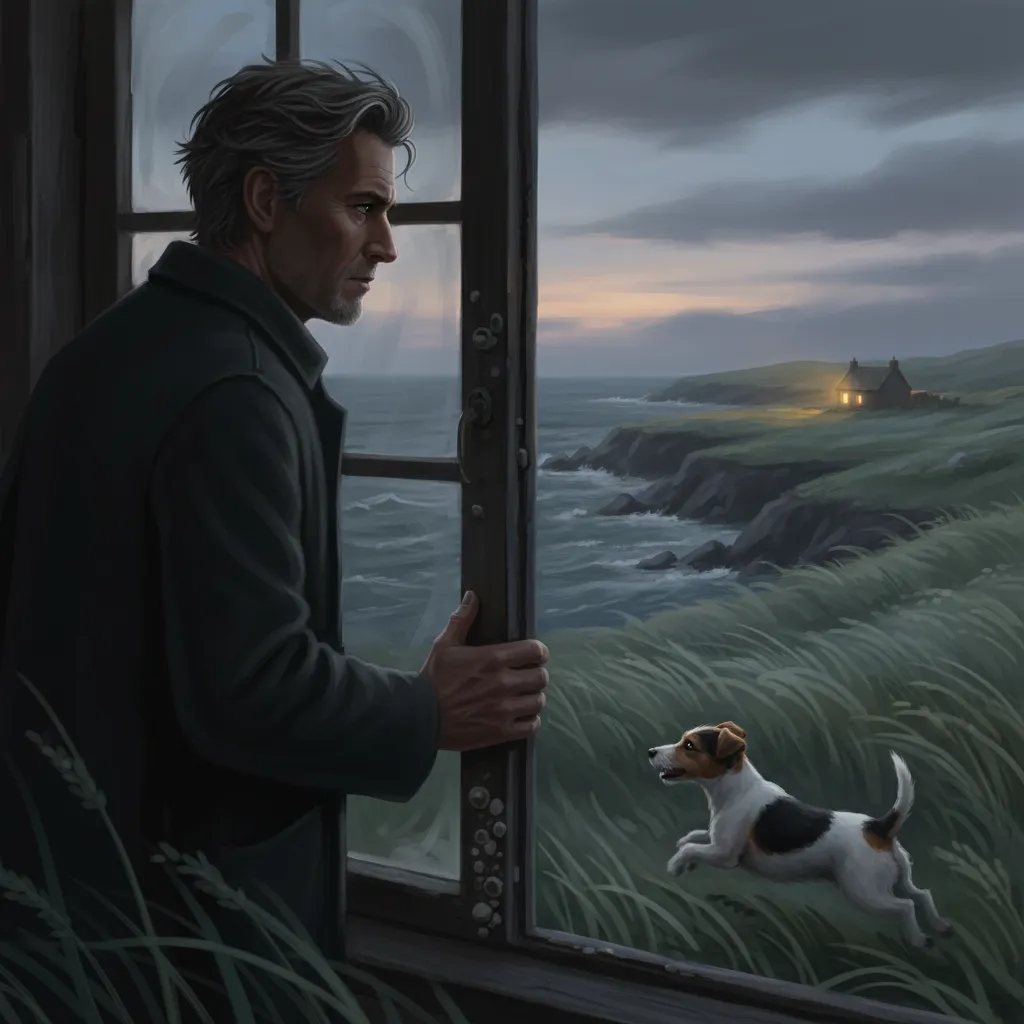
The silence in the house on the cape was of a special kind. It wasn't an absence of sound. It was a hum—a low, continuous hum of the ocean pounding into the rocks somewhere below, and the whistle of the wind through the cracks in the old window frames. Elias Holt woke to this accompaniment every day at exactly five in the morning. Three years, one month, and seventeen days.
He didn't turn on the lights. The November half-light was his ally. He got up from the bed, where the pillow on one side still lay untouched, and went to the window. The sea was the color of molten lead, the sky a shade lighter. Somewhere out there, beyond the horizon, a storm was brewing, set to hit the cape by evening. He could already feel its precursor in the air—a sharp, salty, anxious smell.
The ritual was sacred: ice-cold water on his face, the kettle on the gas burner, three spoons of black tea. While the water boiled, he sat at the table, turned on the radio and the laptop. Coast Guard reports, forecasts, coordinates of fishing trawlers. His world was made of lines on a map, numbers for pressure and wind speed. It was a world that could be understood, measured, predicted. There was no room for surprises. It was safer that way.
He sent the storm warning to his boat crew, took a sip of scalding tea, and raised his eyes. And saw movement.
In the old cottage opposite, which had stood empty for years, a light was on. And from the gate, with a faint creak, ran a small black-and-white creature. A Jack Russell terrier. It was racing down the slope leading to the cliff edge and the narrow strip of beach below, with furious, reckless abandon.
Elias sighed, put down his cup. His duty, his curse, his second nature—to foresee trouble. And a dog running toward a cliff edge during a pre-storm high tide was trouble.