
The medication didn't make him happy. It made the air breathable. The therapy didn’t solve him. It gave him a map for the static. However, by spring of his junior year, Ryan O’Connor could get through a week without once picturing the shotgun. That was the metric now. A quiet mind. A body that felt like his own.
That was progress. His mother called every Sunday. They talked about the weather, his coding projects, her garden. The conversations were simple. They were everything.
He was feeling good about the upcoming snowmachine trip. The spring sun was finally strong enough to bleach the snowfields to a blinding white, and the forecast promised three clear days. Ryan packed his gear with a methodical focus that felt new—not a frantic escape, but a plan.
He checked the oil, the belt, the spark plugs. His hands knew the work. The machine was an RMK. Technically his dad bought it. Social Security. Ryan had it tuned up and waiting in the shed. The smell of gasoline and cold metal was familiar. It wasn’t a ghost. It was a machine that ran.
Jim was meeting him at the trailhead at dawn. Adam and Angi where coming to. It was going to be like the old times in high school.
It was going to be a weekend at the hunting cabin a nice release before the final push for his junior year.
The cabin was warm with woodsmoke and laughter. Ryan ate two helpings of Angi’s moose stew, the rich gravy soaking into the bread he’d brought. The talk was easy, circling around trails and engines and dumb high school stories that didn’t sting anymore. Jim passed the bottle of Crown Royal after dinner, a heavy square of purple in his hand. “To not freezing our asses off tomorrow,” he said. Ryan took it. The liquid was warm and sweet, burning a smooth path down his throat. He didn’t flinch. He passed the bottle on.
The trip out of the cabin had been uneventful, just a long, rumbling procession through stands of birch and across frozen lakes. The day was beautiful, the sky a hard, cloudless blue that made the snow glare with a sharp, mineral light.
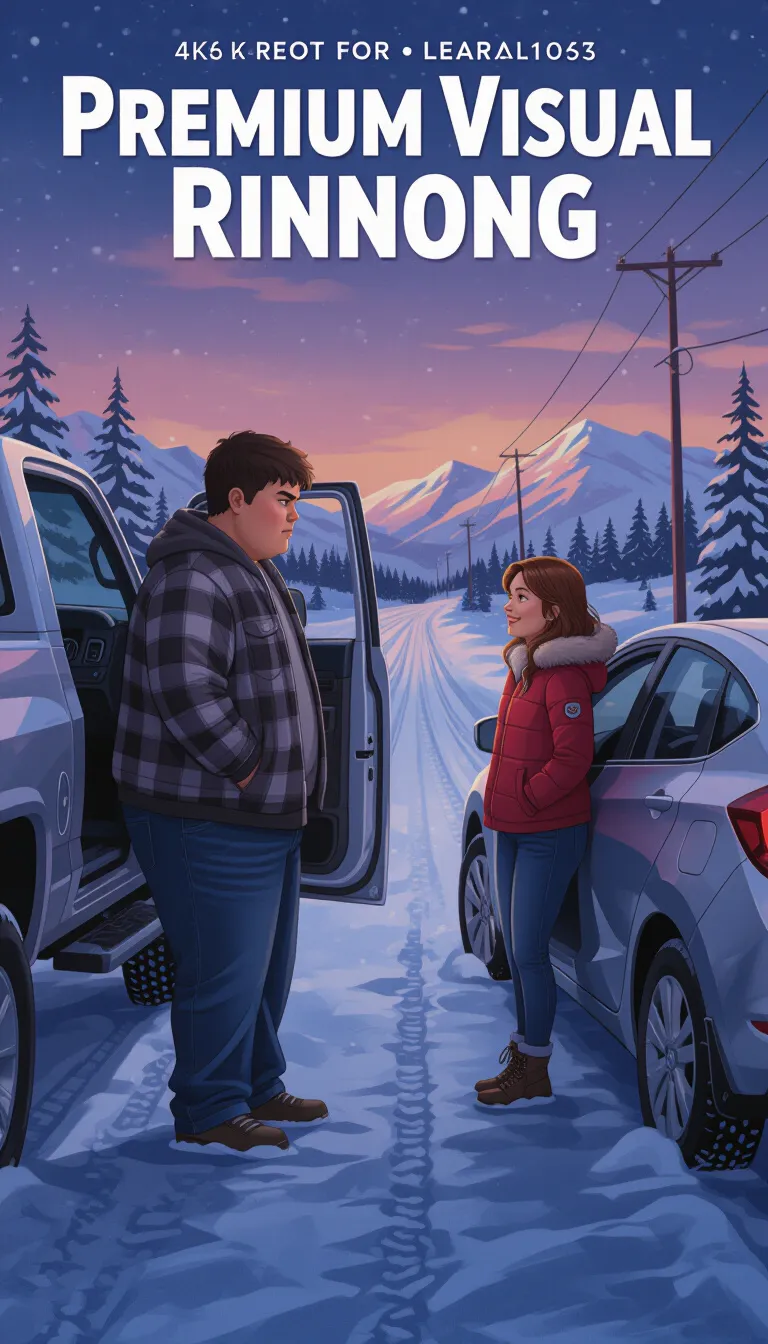
Jim and Ryan landed their machines quickly. Securing them Ryan walked over to Jim's silver dodge.
Along the way Colt ran to own truck. and put his helmet in. He didn't have a trailer attached. He was planning on going back to Fairbanks after he helped Adam and Angi load their machines.
Adam's machine was already loaded. He decided to help Angi. He would grab the ski when it reached the top of the trailer. He didn't like the feeling of a trailer dropping quickly any more than Angi did. He signaled with his hand for her to approach.
….
Ryan woke with a sharp, drilling pain above his right ear. His head was cradled in his palm, his hand damp. He blinked, the world swimming into focus: gravel, the tread of a snowmachine track, the silver flank of Bill’s truck.
He pulled his hand away. His fingers were slick. Not with melt. They were a dark, glistening red.
He looked down. His blue jeans were soaked from thigh to knee in a deep, spreading crimson. The denim was almost black with it. The shock was absolute, a cold void where thought should be.
“Ryan?” Jims voice, close but warped, like he was calling through water. “Ryan, don’t move.”
Ryan looked around. The dashboard lights were familiar—the crack in the plastic, the worn spot on the wheel—but the hands gripping it weren’t his. Jim’s knuckles were white. The truck swayed, gravel pinging against the undercarriage. They were moving.
“Lie back,” Jim said, his voice tight. “Don’t sit up.”
Ryan was half-propped against the passenger door. He obeyed as Jim seemed rather agreesive.
“What happened?” Ryan asked, his voice light, detached, as if inquiring about a misplaced glove.
Jim kept his eyes on the road unwinding on this bright summer day. “You got hurt,”
Ryan’s world went black.
It wasn’t a fade. It was a switch. The dashboard lights, Jim’s white-knuckled hands, the crimson on his jeans—all of it vanished into a silent, weightless nothing.
Then sound rushed back first. The groan of the truck’s engine. The crunch of gravel. Jim’s voice, a raw, repeating prayer. “Hold on, kid. Just hold on.”
Light returned in splinters. The green glow of the clock. The yellow line of the road, hypnotic and steady. Ryan tried to speak, to ask about the machine, about Bill, but his tongue was a thick, dry thing in his mouth.
Ryan saw the red and blue lights strobe through the windshield, heard the siren's wail grow and then fade as the ambulance flew past in the opposite lane. "Who's that for?" he mumbled, the words slurred and thick.
Jim didn't answer. His jaw was clenched, a muscle ticking in his cheek. The truck’s speed didn’t change.
A thin, pale green tie dug into the back of Ryan’s neck. He tried to focus on that. The fabric was coarse, like a paper towel. He was wearing a gown. Why was he wearing a gown?
Angi was crying. Not softly. A raw, hacking sound that came from somewhere deep. She was holding him so tight. “I'm so sorry Ryan” Angie was pleading with him “What had she done so wrong” he thought.
People moved around him in a blur of blue and green. Their voices were low, urgent, a stream of numbers and terms he didn’t know. “BP is holding. Laceration’s packed. Get me the portable.”
A voice cut through the numbers. His mother’s. “Ryan? Baby, can you hear me?” It was tight, strained, a voice holding itself together by a thread.
Another voice, lower, male, answered her. “The CT showed significant swelling. We’re looking at a medically induced coma to let the brain rest.”
Coma. The word didn’t land. It floated somewhere above him, a black cloud with no rain.
His mother’s hand was on his forehead. Cool. Trembling. “Do what you have to,” she said to the doctor. Her voice broke on the last word.
A new presence leaned over him. Glasses reflected the overhead light. “Ryan, I’m going to give you something to sleep. It’s going to help.” A pinch in the IV line taped to the back of his hand.
The edges of the room began to soften. The sobs faded into a hum. The urgent voices became a murmur of radio static.
His mother’s touch was the last sharp thing. Her thumb stroking his temple. “I’m here,” she whispered. “I’m not going anywhere.”
He tried to cling to it. To the coarse paper of his gown. To the dig of the tie. To her voice. They were threads, and he was losing his grip.
The blackness this time was a tide. It didn’t switch. It rolled in, slow and cold, swallowing the light from the edges in.
The last thing he knew was a profound, weightless silence. Not the quiet of his room after his dad died. Not the empty quiet of Alaska without Riley.
This was the quiet of before. Of nothing. A perfect, absolute zero.
Then, nothing.
Time became a concept that happened to other people.
There were sensations, sometimes. A pressure on his chest. The beep and hiss of machines. A distant, rhythmic thump that might have been his own heart. Voices passed through the dark like distant ships on a black sea. He couldn’t make out the words.
A voice cuts through the black sea. Saw
It’s soft, melodic, out of place against the mechanical hiss. “Ryan?”
He knows that voice. It’s a voice from before the quiet. From before the zero.
“Riley?”