
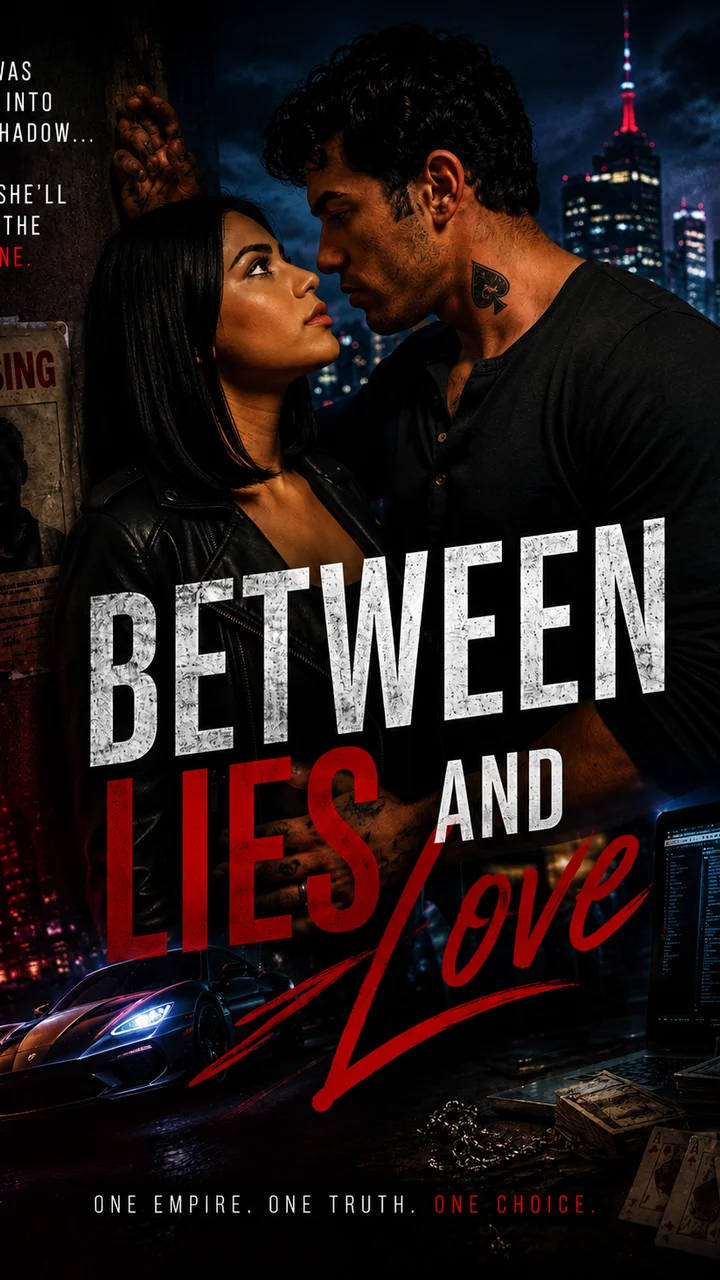
Her childhood bedroom looked exactly as she'd left it three years ago. Same faded posters on the walls, bands she didn't listen to anymore. Same crack in the ceiling that looked like a river delta. Same window overlooking the street where she'd learned to ride a bike, to pick a lock, to read the fear in a person's eyes before they spoke.
She sat on the edge of the bed, the photograph face-down on her lap.
The mattress had dipped under her weight, the springs groaning in recognition. She hadn't been here since she was sixteen, since the night her mother had looked at her across the kitchen table and said, Your father is gone. We don't say his name anymore. Not dead. Not disappeared. Gone. Like he'd been a tooth that fell out, a shirt that got lost in the wash.
Maya's thumb pressed into the edge of the photograph. The paper bent, a slight curve under the pressure, and she felt the weight of it in her hands like something alive. The back of the photograph was blank except for the symbol — the curved line arcing like a bent question mark, the dot at its base dark and deliberate. She'd seen it on her father's ledger. On the lighter left on her counter. On the back cover of the book that held his death.
Now it was here, in her childhood bedroom, in a house where her mother still slept three doors down.
The faint hum of traffic filtered through the window, muffled by the glass and the curtains she'd never bothered to replace. A car passed. Then another. The city kept moving, same as it always had, same as it would tomorrow, and Maya sat frozen on the edge of a bed she'd outgrown years ago, holding a piece of paper that could break her open.
She didn't want to turn it over.
The thought surfaced before she could stop it, cold and honest. She didn't want to see what was on the other side. Because once she saw it, she couldn't unsee it. Once she knew, she couldn't pretend she didn't. And there was a part of her — a small, tired part that she'd been ignoring for weeks — that wanted to go back to not knowing. Back to the days when her father was just a ghost, not a body on concrete. Back to when her mother was just a woman who'd loved her, not a woman who'd traded a life for one.
Her thumb pressed harder. The paper edge bit into her skin.
The room was quiet. Too quiet. The kind of quiet that made the air feel thick, that made every breath sound louder than it should. Her father's old watch sat on the nightstand, its hands frozen at 3:47 — the time he'd stopped winding it, or the time it had stopped on its own, she'd never known which. The leather strap was cracked, the face scratched, and she'd kept it there because she didn't know where else to put a thing that held so much weight.
Beside the watch, a stack of books she'd never finished. Dog-eared pages. Tattered spines. A library card from middle school still tucked into one of them, her name written in her own handwriting, the letters round and careful. She'd been twelve. She'd believed in things then. In endings that made sense. In people who stayed.
The photograph sat in her lap, face-down, patient, waiting.
Maya looked at the ceiling. The crack was still there. She'd traced it a thousand times as a kid, imagined it was a river, a road, a scar across the earth. She'd lie on this bed and wonder where it led, what was at the end of it. She'd been so young. So stupid. So sure that the worst thing in the world was a broken ceiling and a father who came home late.
She didn't know then that late meant dead. That broken meant sold. That the crack in the ceiling was nothing compared to the cracks in the people around her.
A floorboard creaked somewhere down the hall. Maya's hand stilled. Her breath caught. She listened, her body tensing, her eyes fixed on the door.
Nothing. Just the house settling. Just the old wood breathing.
She let the breath out slowly.
Her mother was asleep. Or pretending to be. It didn't matter which. Maya hadn't told her she was coming. Hadn't called, hadn't texted, hadn't given any warning. She'd walked through the front door with her own key — the one her mother had never asked for back — and climbed the stairs in the dark, past the photographs on the wall, past the closed door of the room that used to be her parents' room, past everything she'd spent three years trying not to think about.
And now she sat here, holding the answer to a question she was terrified to ask.
The photograph felt heavier than it should. The paper was old, slightly curled at the edges, the kind of yellowing that came from years in a cardboard box in a storage unit no one was supposed to find. She could smell it — dust and old ink and the faint chemical tang of developing fluid, like the darkroom her father had built in the garage when she was a kid. She'd spent hours in there, watching him work, watching images appear out of nothing, watching him hold a photograph the way she was holding this one now. Like it was the only thing in the world that mattered.
He'd taught her that. How to see. How to wait. How to let an image reveal itself instead of forcing it.
Don't rush it, Maya. The picture is already there. You just have to let it come to you.
She heard his voice like he was in the room. Like he was sitting on the bed beside her, patient and steady, waiting for her to understand.
Her hand curled around the edge of the photograph. The paper bent under her thumb. The symbol faced up, the curved line and the dot staring at her like a question she couldn't answer.
She thought about the lighter. Warm from someone's hand. Placed dead center on the ledger. Aligned to the spine like a person who cared about precision. Like a person who wanted her to find it, wanted her to follow the trail, wanted her to end up here, in this room, holding this photograph, alone.
Whoever left that lighter knew her. Knew the layout of her apartment. Knew where she kept her father's ledger. Knew how to move through her space without leaving a trace except the one they wanted her to find.
And now she was doing exactly what they wanted.
The thought made her stomach turn. She was following breadcrumbs laid by someone she couldn't see, someone who knew more about her father's death than she did, someone who had access to places she thought were safe. The trail had led her here, to her childhood bedroom, to a photograph she was afraid to turn over.
But she'd come this far. She'd broken into a storage unit. She'd decoded a sequence scratched into a lighter. She'd faced a man with a spade tattoo who told her that her mother sold her father to the machine.
She wasn't going to stop now because the truth was heavy.
Maya took a breath. Steady. Slow. The kind of breath she took before a job, when her hands were steady but her heart was not, when the next move would decide everything.
She turned the photograph.
Just a little. Just the first edge, curling up under her thumb, the surface catching the dim light from the window.
A flash of color. A face. Younger. Unmistakable.
Her mother.
Maya's breath caught. Her hand froze, mid-motion, the photograph half-turned, half-revealed, hanging between what she knew and what she was about to know. She saw her mother's face — maybe twenty years younger, the same sharp jaw, the same dark eyes, the same mouth that had kissed her goodnight a thousand times — and behind her, the corner of a garage door. Metal. Scratched. Familiar.
The garage where Dante worked.
Her hand trembled. The paper shook. The edges of the photograph cut into her skin, and she didn't feel it.
She stared at her mother's face. The woman who had held her, fed her, told her she was brave and smart and loved. The woman who had sat beside her bed when she was sick, who had stayed up late waiting for her to come home, who had cried at her high school graduation and pretended she wasn't crying. The woman who had sold her father to a man with cold gray eyes and a scar through his eyebrow.
Maya's jaw tightened. Her teeth ground together. The photograph shook in her grip, and she didn't know if it was anger or fear or something else entirely, something that didn't have a name yet, something that lived in the space between wanting to scream and wanting to collapse.
She didn't look away from her mother's face.
The photograph was still only half-revealed. The rest of it — the body on the concrete, the full scene, the truth she'd been chasing — waited on the other side of this moment, patient as ever, patient as the person who had left the breadcrumbs, patient as the house settling around her, patient as the city outside that didn't know and didn't care that Maya Cardenas was about to see what happened to her father.
Her thumb pressed harder. The paper bent. The edges bit into her skin.
She was on the edge of her childhood bed, holding a photograph of her mother in a garage where her father died, and she had not yet seen the whole truth.
But she was close.
So close she could feel it in her teeth.
Her thumb held the edge of the photograph, caught between turning it fully and letting it fall back to her lap. The muscles in her forearm burned from the tension, from holding herself in this half-finished gesture, from refusing to complete the motion that would change everything.
The crack in the ceiling stared down at her. The river delta. The road she'd traced a thousand times as a child, never knowing it led here.
She could hear her own heartbeat. Loud in her ears. Loud enough that she almost missed the other sound — the faint creak of a floorboard, closer this time, not the house settling but something else. Someone else.
Her mother was awake.
Maya's hand stayed frozen. The photograph half-turned. Her mother's younger face stared up at her from the edge of the image, and somewhere in the house, the real version of that face was moving through the dark, drawn by the sound of footsteps in a bedroom that hadn't been occupied in three years.
Maya didn't lower the photograph. She didn't hide it. She held it where it was, half-revealed, half-hidden, a secret caught between her fingers, and she listened to the footsteps grow closer.
They stopped outside the door.
A pause. A breath. The kind of pause that meant someone was deciding whether to knock or walk away, whether to face what was on the other side of the door or pretend they hadn't heard anything at all.
Maya knew that pause. She'd made it herself, a hundred times, standing outside doors she didn't want to open.
The door handle turned.
Slow. Careful. The way someone turned a handle when they didn't want to make noise, when they were hoping the person inside was asleep, when they were preparing themselves for a conversation they didn't want to have.
The door swung open.
Her mother stood in the doorway, silhouetted against the dim light from the hallway. She was wearing the same robe she'd worn for as long as Maya could remember — faded blue terry cloth, the pocket torn at the corner, the tie knotted twice because it never stayed closed. Her hair was loose, graying at the temples, and her face was bare, stripped of the careful makeup she wore in public, the armor she put on every morning.
She looked older than Maya remembered. Smaller. The years had carved lines around her mouth, deepened the hollows under her eyes, pulled something vital out of her that Maya had never noticed was missing until now.
Her mother's gaze landed on the photograph in Maya's hands.
The recognition was instant. Maya saw it flash across her face — the widening of her eyes, the slight parting of her lips, the way her hand rose to her chest like she'd been struck. The robe pulled tight across her shoulders, and for a moment, neither of them moved. Neither of them spoke.
The city hummed outside. The ceiling crack watched from above. The photograph sat between them, half-revealed, heavy with everything it carried.
"Maya." Her mother's voice cracked on the second syllable, barely a whisper, thin as glass. "Where did you get that?"
Maya didn't answer. She looked at her mother's face — the real one, the one in the doorway, the one that had kissed her forehead and lied to her for nineteen years — and she felt something shift in her chest. Something cold. Something final.
Her thumb pressed harder into the edge of the photograph. The paper bent. The edges bit deeper into her skin.
She still hadn't turned it all the way. She still hadn't seen what was below her mother's face, what the rest of the image held, what body lay on the concrete floor of that garage.
But she could feel it. Like a weight pressing down on the other side of the paper. Like a presence waiting to be seen.
Her mother took a step into the room. The floorboard creaked under her foot, the same one that had given Maya away, and she stopped, her hand still pressed to her chest, her eyes fixed on the photograph like it was a wound she couldn't look away from.
"Maya, please." Her mother's voice was lower now, steadier, the voice she used when she was trying to control something that was already slipping away. "Put it down. We need to talk."
The word talk landed like a slap. Maya's jaw tightened. Her teeth ground together, the pressure building in her temples, in her throat, in the hand that held the photograph.
"Talk," Maya said. The word came out flat. Dead. "You want to talk."
"Yes."
"Now."
"Yes."
Maya looked down at the photograph. At her mother's younger face. At the corner of the garage door. At the symbol on the back, the curved line and the dot, the mark that had led her here, to this room, to this moment, to this woman who had stood in a garage and watched her father die.
"I'm not putting it down," Maya said.
The words hung in the air between them, final and sharp, and Maya felt something release in her chest. Something that had been wound tight for weeks, for months, for years. Something that had been waiting for this moment, for this conversation, for the chance to finally be spoken.
Her mother's hand dropped from her chest. Her shoulders sagged. The fight went out of her, all at once, like a string cut, and she looked at Maya with an expression that was older and sadder than anything Maya had ever seen on her face.
"I know," her mother said. "I know what you found."
Maya's thumb pressed into the edge of the photograph. The paper bent. The edges cut into her skin.
She didn't look away from her mother's face.