
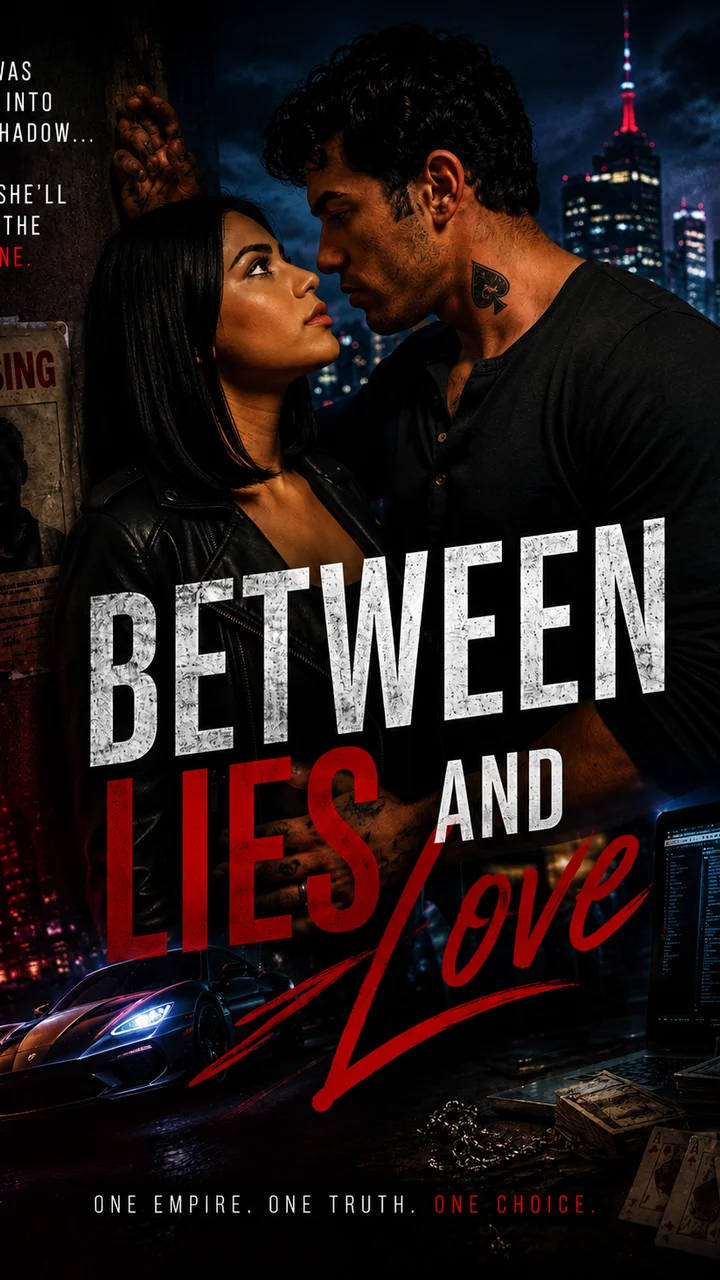
Maya killed the engine. The car shuddered once, then settled, and the silence that rushed in was heavier than the motor's noise had been. Red Hook spread out through the windshield like a photograph someone had left in the rain—gray sky, gray asphalt, gray water visible between the warehouse gaps where the harbor breathed fog into the streets.
The garage sat across the street. Cross Street Auto. The sign hung crooked, the letters faded to ghosts of themselves, and the half-open door spilled a single cone of fluorescent light onto the cracked concrete apron. Inside, she could see the underside of a sedan, lifted on jacks, and the shadow moving beneath it—arms working, a wrench clinking against something metal, a grunt that didn't carry through the glass.
Her hands stayed on the wheel. Ten and two. Her mother had taught her that, once, in the parking lot of a grocery store, before Maya had learned to drive well enough to steal cars. The leather of the steering wheel was warm from her palms. The engine ticked as it cooled, a sound like a heart slowing down.
She'd driven here on autopilot. The photograph was still in her jacket pocket, the edge of the paper pressing against her ribs every time she breathed. She hadn't looked at it since she'd left her mother's house. She didn't need to. The image was burned into the inside of her eyelids—her father's face, young and alive, grinning at something just off-camera, the symbol drawn across his throat in black marker like a scar that hadn't healed yet.
The shadow under the sedan shifted. The wrench clinked again, and she heard a man mutter something—words too low to reach her, but the tone was familiar. A mechanic talking to a machine like it could answer back.
Maya's thumb found the edge of the photograph through the fabric of her jacket. She pressed. The paper bent slightly, and she felt the crease she'd put in it earlier, the same crease her mother's thumb had worn into the corner over twenty years.
She thought about the recording. The forty-seven minutes of Liam Croft's voice, the way he'd sounded tired when he said Do it quick, you son of a bitch. I have a daughter. The way her father's last words had been about her. Maya Cardenas was trying to walk into a war, and her father had already drawn the map with his blood.
A truck rumbled past, shaking the car slightly, and she watched it in the rearview mirror until it turned a corner and disappeared. The harbor fog crawled between the buildings, and the fluorescent light in the garage flickered once, then steadied.
She hadn't rehearsed anything. That was the thing. She'd spent the drive thinking about what she'd say— I know who you are, I know what you did, tell me everything —and none of it had stuck. Every version sounded like a line from a movie. Every version sounded like someone else's courage.
Her hand left the wheel. She touched the photograph again, the paper warm from her body heat, and she felt the weight of it—not physical, but something else. The weight of twenty years. The weight of her mother's silence. The weight of Roman Cardenas choosing to die so she could live.
I'm ready now.
She'd meant it when she said it. She still meant it. But ready didn't mean she knew what came next. Ready meant she was willing to find out.
The shadow under the sedan shifted again—legs moving, the sound of a creeper rolling on concrete. The man was repositioning. He hadn't heard her yet. The garage was still full of his own noise, the clink of tools, the low hum of the fluorescent lights, the distant sound of a radio playing something she couldn't make out over the street traffic.
Maya took a breath. Let it out slow. Her hands were steady, which surprised her. She'd expected them to shake. Instead, they felt like they belonged to someone else—someone who had already decided and was past the part where she could change her mind.
The photograph pressed against her heart. Her father's grin. The symbol across his throat. The man who had held him down was fifty feet away, working on a car like he was just another mechanic, like he hadn't spent the last twenty years hiding inside someone else's name.
Daniel Cross. The alias Liam Croft had chosen for himself. A name that meant nothing, a name that let him sleep at night.
She wondered if he dreamed about her father. She wondered if the sound of Roman's voice still lived in his ears, the way it lived in hers from a recording she'd only heard once. She wondered if he'd known, all these years, that she would come. That the tape he'd left under her mother's door three years ago was an invitation, not a confession.
The Zippo lighter in her other pocket. The curved-line-and-dot symbol pressed into the brass. She'd brought that too, though she wasn't sure why. Evidence. A breadcrumb. A message from someone who wanted her to find the truth, one piece at a time.
Her hand was on the door handle.
She hadn't decided to move. Her body had decided for her.
The metal was cold under her fingers, colder than she'd expected. The latch clicked when she pulled it, and the sound was louder than it should have been, cutting through the car's silence like a crack. The door swung open, and the air that hit her face was thick with salt and oil and the distant smell of the harbor—low tide, wet wood, something rotting gently.
She stepped out.
Her boots hit the asphalt. The sound was solid. Final. She closed the door behind her—softly, not a slam—and the car settled on its suspension like it was letting out a breath she hadn't known it was holding.
The garage was thirty feet away. Twenty-five. The concrete apron between her and the half-open door was cracked and stained, dark patches where oil had soaked into the surface over years of use. A garbage can stood near the door, overflowing with rags and empty oil bottles. A sign taped to the inside of the window read BACK IN 10 in marker so faded it was almost invisible against the glass.
She crossed the street.
The gravel started at the edge of the apron, a thin layer of crushed stone that crunched under her boots like she was walking on broken glass. The sound was unmistakable—anyone inside would hear it. She didn't try to quiet her steps. She wanted him to know she was coming.
The fluorescent light spilled across her face as she reached the open bay. The work light inside was brighter than she'd expected, harsh and white, and it made the shadows in the corners of the garage look absolute. A tool chest against the far wall. A tire rack. A calendar from three years ago still pinned to the corkboard, the months unchecked.
And the sedan. Lifted on four jack stands, the oil pan exposed, a drain pan beneath it catching slow drips. The smell was stronger here—oil and gasoline and the metallic tang of brake fluid. The concrete floor was damp, cool, and she could feel the cold seeping through the soles of her boots.
The shadow had stopped moving.
The creeper was still. The wrench was still. The radio—country, she could hear it now, a song about a truck and a dog and a woman who'd left—played on, low and tinny from a speaker somewhere above the tool chest.
A man's arm appeared from under the sedan. Then his shoulder. Then his head.
He was on his back, the creeper's headrest supporting his neck, and when he turned to look at her, his face was half in shadow and half in light, caught between the fluorescent glow and the dark under the chassis.
He was older than she'd expected. Mid-fifties, maybe. His hair was gray at the temples, the rest of it dark and slicked back with sweat. His jaw was heavy, unshaven, and his eyes—his eyes were the same color as the harbor fog. Gray. Flat. Old.
She knew him. She'd never seen his face before, not in person, but she knew him. The jaw. The shoulders. The way he held still when he saw her, like an animal deciding whether to run or fight.
The photograph in the CROFT bin. The crease in the corner. The symbol drawn across her father's throat.
He was the one holding Roman down.
The photograph in her jacket pocket pressed against her chest like a second heartbeat.
He blinked once. His hand, still holding the wrench, lowered to the concrete floor. The metal hit the ground with a soft clink—different from the earlier sound. Deliberate. A weapon set down, not dropped.
The radio played on. The fluorescent light flickered. The harbor fog was still crawling between the buildings, and the damp concrete was cool under her feet, and she was standing in the doorway of the garage where the man who had helped kill her father was pretending not to recognize her.
But he recognized her. She could see it in the way his jaw tightened. In the way his fingers went still on the wrench. In the way he looked at her face and saw someone else—someone younger, someone with the same jawline, the same dark hair, the same way of standing like she was already measuring the distance between herself and the nearest exit.
His mouth opened. Closed. Opened again.
"You're not a customer," he said.
His voice was rough. A smoker's voice. A voice that had spent years saying nothing important.
Maya's hand went to her jacket pocket. She touched the edge of the photograph. She didn't pull it out. Not yet.
"No," she said. "I'm not."
The gravel was still shifting under her boots, settling into the spaces between stones. The garage smelled like oil and salt and the weight of two decades of silence.
He pushed himself up on one elbow. The creeper squeaked under his weight. His eyes never left her face, and she watched him look at her mouth, her hands, the way she stood—measuring her the way she was measuring him.
"You got a car needs fixing?" he said. "Because I'm closed."
"You're Liam Croft."
The name landed like a stone in still water. The silence that followed was wider than the garage, wider than the street, wider than the harbor fog that was still rolling in from the water, gray and patient and cold.
He didn't deny it. He didn't confirm it. He just looked at her, and in the fluorescent light, something shifted in his eyes—not recognition, not fear, something older. Something that had been waiting.
"Who's asking?" he said.
Maya pulled the photograph from her jacket pocket. She didn't unfold it. She held it against her chest, the paper warm from her body, and she let the silence stretch until she felt him lean into it, waiting.
"Maya Cardenas," she said. "Roman's daughter."
The name hit him differently. His hand, still holding the wrench, went white at the knuckles. Then he let go, and the wrench clattered to the concrete, and he lay back on the creeper like the breath had been knocked out of him.
The fluorescent light hummed. The radio played on. The gray eyes stared at the underside of the sedan, and Maya watched his throat move as he swallowed.
She stepped into the garage.
The concrete was cool under her boots. The damp seeped through the soles, and she felt it—the cold, the weight, the absolute stillness of the air between them.
She stopped at the edge of the sedan, the lifted chassis between them. The drain pan was still dripping, slow and steady, and she could see his reflection in the oil slick on the concrete—distorted, wavering, a ghost of a man she'd spent her whole life trying not to become.
"I listened to the tape," she said.
His eyes closed. Just for a second. Then they opened again, and he looked at her from under the chassis, his face half in shadow, and he said, "I thought you might."
"You left it for me."
"I left it for Elena. But I figured you'd find it eventually."
"Three years ago."
A beat. The fluorescent light flickered, steadied.
"I wanted you to have time," he said. "Time to decide what you wanted to do with it."
The cold was seeping up through the concrete, through her boots, into her bones. She could feel it in her hands, in her chest, in the hollow space behind her ribs where the photograph was pressing against her heart.
"You held him down."
It wasn't a question. He answered anyway.
"Yes."
"You watched him die."
The gray eyes didn't look away. "Yes."
"He asked you to."
A breath. A pause. Something cracked in his voice when he spoke again, something that had been waiting twenty years to break.
"Yes. He did. He said—"
" Do it quick, you son of a bitch. I have a daughter. "
The words hung in the air between them, and Maya watched his face change. The way his jaw loosened. The way his hands went still. The way his eyes glistened in the fluorescent light.
He hadn't expected her to know that. He hadn't expected her to know it the way she did.
"I have questions," she said. "You're going to answer them."
He didn't move. He lay on the creeper, half-under the sedan, the drain pan still dripping, the radio playing a song she didn't recognize, and he looked at her with those flat gray harbor-fog eyes, and she watched him decide.
The shadow under the lifted sedan was still. The work light was still. The photograph was pressed against her chest, and her father's grin was on the other side of the paper, and the symbol drawn across his throat was still waiting to be explained.
Liam Croft closed his eyes. Opened them. His voice, when it came, was low and rough and old—old in a way that had nothing to do with years.
"Yeah," he said. "You earned that."
He pushed himself up to a sitting position on the creeper. The wheels squeaked. The fluorescent light caught the side of his face, the sweat on his temple, the lines around his mouth that looked like they'd been carved by something sharper than time.
"What do you want to know first?"
Maya's thumb found the edge of the photograph. She pressed. The paper bent, and she felt the crease—her mother's thumb, her own thumb, the weight of twenty years folded into a single corner.
"Everything," she said.
The shadow stopped moving.